A Brief History of Crewelwork
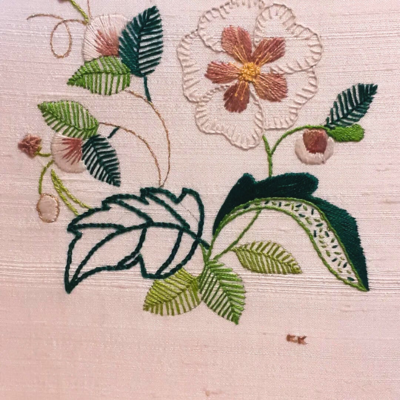
Crewelwork has been used for centuries on bed hangings, furnishings and decorative textiles, particularly in Britain. Historic crewel pieces often feature:
- Twisting stems and vines.
- Exotic flowers and leaves.
- Birds, animals and stylised trees of life.
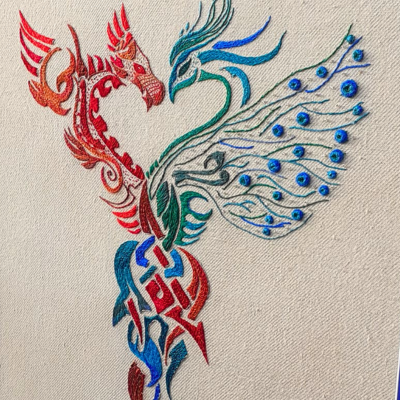
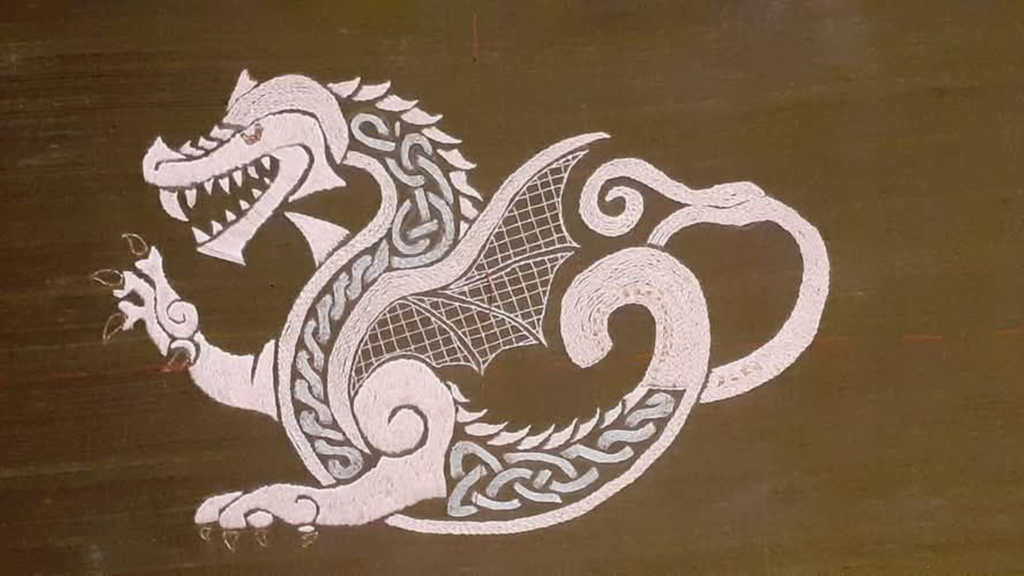
Today, crewelwork continues to evolve, with many artists adapting traditional stitches and motifs for contemporary designs.
Materials Used in Crewelwork
- Threads: Soft, twisted wool threads in solid or shaded colours.
- Ground fabric: Traditionally linen or linen twill – strong, stable, and able to support textured stitching.
- Needles: Sharps or crewel needles with eyes large enough for wool threads.
- Hoops or frames: To keep the fabric firm and the stitches even.
Common Crewelwork Stitches
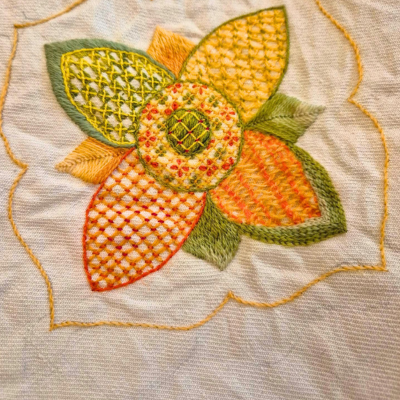
Crewelwork uses many familiar embroidery stitches, including:
- Stem stitch
- Chain stitch
- Satin stitch
- Long and short stitch
- French knots
- Laid and couched work
It’s the combination of wool, fabric, and pattern that gives crewelwork its distinctive feel.
Modern Crewelwork at Kizzyka Designs
At Kizzyka Designs, crewelwork is inspired by:
- The Mid Wales landscape – seed heads, leaves, cow parsley and wild plants.
- Historical textiles – traditional structures and motifs.
- British wool – chosen for its softness, colour and character.
Designs blend traditional stitches with contemporary shapes and palettes.